 Loading...


“Anybody producing a show like this is not doing it independently. We can’t do it by ourselves. Anybody who thinks they can is really delusional.”
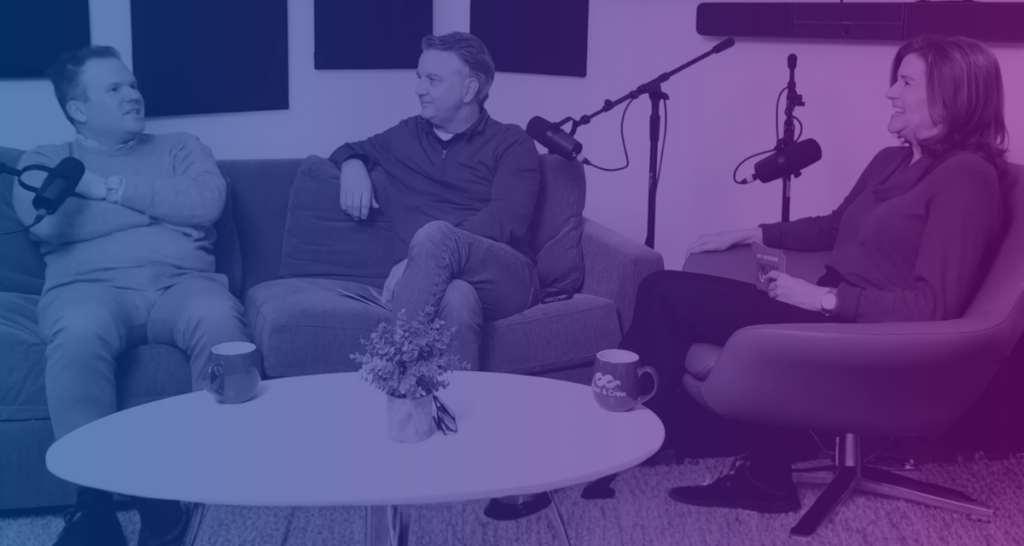
James Barker is the founder and CEO of Edits Etc., a fully remote post-production collective of nearly 40 editors, sound designers, and colorists with credits spanning documentary, commercial, and narrative work like The Table and Remnants of Nova.
Nancy Pop is an actor, producer, and director at In Case You Missed It Productions, a New York-based production company whose credits include the highly rated Poets Are the Destroyers and the TV mini-series America’s Next Top Trucker, with several more projects currently in post.
Together, they’ve built one of the more active vertical microdrama pipelines on the East Coast, with seven productions completed and counting. That pace, Pop says, requires a specific mindset.
A format that’s hard to categorize
Pop describes vertical microdramas as “a condensed version of television built to be viewed on your iPhone or iPad.” Barker frames it differently from the post-production side: “This is, in reality, a feature film being edited in about five weeks.”
That tension—television scope, feature-film compression, mobile-first delivery—is what makes the format genuinely its own thing. Episodes are short. The story is not. As Pop puts it, the whole structure is built around “making a meal out of morsels, basically.”
Preparing to Run Payroll? Get Support for Your Production
Production at pace
Pre-production typically runs two to four weeks on a hundred-page script, with shoot days covering eight to sixteen pages. Pop is direct about what that demands: “It’s definitely not for the faint of heart … It takes a very organized and well-connected, seasoned producer to pull these together.”
On the post side, Barker runs multiple editors in parallel. His benchmark for rough cuts is that “each editor essentially gets one day per five minutes that you’re going to see on screen.” Sound design and color get wrapped inside six weeks total, sometimes four. The single quality he looks for when hiring: “Flexibility and endurance.”
Each app also has its own house style. Some want cinematic cutting, while others want fast jump cuts, digital punch-ins, and wall-to-wall music. Barker describes that style as “a little bit of, like, a reality TV meets a game show in terms of the editing style.” Editors who can’t shift between those modes quickly enough don’t last on the schedule.
A market with real momentum
Microdramas are an $8 billion global market, and Barker believes it was the only sector of the entire film industry that grew last year. Revenue projections for the US and UK suggest the number could hit $14 billion by 2027, with some estimates going considerably higher by 2030.
That growth is drawing corporate interest. But Pop warns that Hollywood studios entering this space may underestimate how different the format really is. “It’s an intersection of filmmaking with tech, and it’s an intersection with the video game world,” she says. Apps control location approvals, casting sign-off, and editing style. Productions that treat it like a short TV pilot often find themselves unprepared.
Getting in
Both Barker and Pop point to the same path for newcomers: find a connection and learn by doing. Their own partnership started when Barker jumped into a project midway through with no prep and no roadmap.
The work rewards people who know their craft cold and move without second-guessing. As Pop says, “It’s narrative storytelling for mobile-first audiences.” Everything else follows that.
Whether you’re producing vertical microdramas or traditional film and TV, Cast & Crew supports productions of every size and format, from payroll and budgeting to production planning, prep through wrap.
Get Support for Your Production